


Preface
Briefing description and more.
This briefing provides tips for navigating the vBriefings platform and making effective use of its briefings, flashcards, outreach tools, and other materials.
Companion Videos
Briefing Meta
Counts:
| Main Text | |
| Key Tips | 8 |
| Counterclaims | 0 |
| Supplementary | 0 |
| Further Study | 0 |
| Footnotes | 0 |
| Media & Advocacy | |
| Advocacy Notes | 0 |
| —Socratic Questions | 0 |
| Flashcards | 0 |
| Presentation Slides | 0 |
| Memes & Infographics | 0 |
| Companion Videos | 0 |
Activity Log:
Key Points Links
Loading…
Help Us Improve
Please send your suggestions for improvements, or report any issues with this briefing to [email protected]
We appreciate that you are taking the time to help us improve. All suggestions and reports will be carefully considered.
Summary
A concise summary of the briefing (see below for citations).
This briefing explains how the vBriefings platform is organized and how to make effective use of its resources. It covers the platform’s structure, navigation tools, briefing format, major content types, and ways different audiences can use the platform for learning, conversations, and outreach. It also highlights practical ways to use briefings, flashcards, slide decks, visuals, and other resources both for personal learning and for discussing veganism and animal ethics with others.
Context
Places this topic in its larger context.
vBriefings is designed to serve three audiences: the veg-curious, everyday vegans, and animal activists. Their interests overlap enough to justify a single platform and avoid unnecessary duplication, yet differ enough to require careful organization and content design.
We call vBriefings a platform rather than simply a website because it is more than a collection of articles. In addition to briefings, it includes flashcards, infographics, videos, slide decks, outreach tools, listings, and other educational resources. These resources work together to support exploration, learning, conversations, and outreach.
Key Points
This section provides talking points.
First, understand how the platform is organized.
The platform’s organization reflects the needs of its three primary audiences: the veg-curious, everyday vegans, and animal activists. The sections below explain the major elements of that organization and how they work together.
Text-Centric
vBriefings is intentionally text-centric. Videos are among the most powerful tools for education and advocacy, but text offers unique advantages for the types of resources provided here.
Text allows readers to:
- Scan and navigate quickly. Readers can jump to specific sections, search for keywords, compare claims and counterclaims, and access citations without scrubbing through a video.
- Find information when they need it. Text is well suited to conversations and outreach, where people often need quick access to a particular fact, source, or talking point.
- Learn wording they can use. We strive to use language that is not only accurate, but also clear, memorable, and rhetorically effective—well-crafted sentences that can be remembered, paraphrased, quoted, and adapted in real time.
- Reference and share content easily. Text makes it simple to cite sources, share specific sections, and return later to a particular point.
Many excellent videos on veganism and animal ethics already exist. Rather than duplicate those efforts, vBriefings focuses primarily on creating structured, citation-rich resources that are easy to navigate, reference, and share.
Mobile-Friendly
The content is designed to be displayed on a wide range of devices, including laptops, smartphones, and tablets. On devices with smaller screens, multiple columns collapse into one column to avoid horizontal scrolling.
Types of Content
The major types of content are:
- Listings provide lists of briefings in their main column. The home page is a listing page showing all briefings, and other listings are available for core briefings, advocacy briefings, search results, and other collections of content.
- Making the home page a listing of briefings rather than a more traditional landing page was a deliberate design decision intended to help readers quickly see what is available and get directly to the content that interests them.
- Briefings are the heart of the platform. They present concise, structured information on veganism, animal ethics, advocacy, and related topics.
- Pages provide information about the platform itself, such as its mission, policies, and organizational details. The /about page is an example.
- Documents, also called organizational docs or articles, are in a completely different area and have their own knowledge base. They are of interest only to those involved in maintaining the site and its contents.
Briefing Topics
Briefings are organized into topics and subtopics, sometimes referred to as categories. Topics provide a more specific way to list and find related content across those broader areas.
The top-level topics are Core Briefings, Objections, Animals and Exploitation, Philosophy and Society, Environment, Human Health, and Advocacy. Topics provide a more specific way to find related content across those broader areas.
Topical navigation is provided in two places:
- On listing pages, sidebar links lead either to an individual briefing (document icon) or to a list of briefings (list icon) for a topic or subtopic. To improve scanability and help readers locate relevant content more quickly, some of the briefing links are essentially shortened titles.
- On breadcrumbs, links show the path from the current page back through the topic hierarchy. They appear near the top of briefing and listing pages and provide a quick way to navigate to broader topics and subtopics. For example, the breadcrumb All Topics > Human Health > Nutrients of Concern indicates that the current briefing belongs to the Nutrients of Concern subtopic within Human Health. Each breadcrumb item is clickable unless it represents the page you are already viewing.
When you click on a topical link, you will be taken to a listing page for that topic or subtopic, unless the link is, in effect, a short title for a briefing. In that case, you will be taken directly to the briefing. The breadcrumb on the listing page will blink to remind you of which briefings are in the list, and that you are no longer viewing a list of all briefings.
Understanding the Briefing Structure
Briefings follow a consistent structure, and all have the same main sections. A table of contents is provided to jump quickly between sections. This consistency makes it easier to find information quickly, compare related topics, and become familiar with new subjects.
Sections:
- Preface. The preface provides several parts, most behind a collapsible show/hide panel.
- Excerpt: The so-called (and somewhat misnamed) excerpt is a very short description of the briefing that also appears on listing pages. We use the term excerpt to remain consistent with our content management system.
- Companion Videos. Platform videos that summarize or highlight the briefing. Not all briefings have companion videos.
- Share This Briefing. Provides quick links for sharing the briefing on social media, email, messaging platforms, and other services. A preview of the image that will typically accompany the shared link is also shown.
- Briefing Meta. Provides information about the briefing itself, including counts of key sections, supporting resources such as flashcards and slides, and an activity log documenting updates over time.
- Key [Something] Links. Provides links to the individual entries in the briefing’s main content section. The name of this section varies by briefing and may be Key Points, Key Tips, Key Guidelines, Key Tactics, or something similar. These links provide a quick overview of the section’s contents and allow readers to jump directly to specific entries of interest.
- Help Us Improve. Provides a convenient way to report errors, suggest improvements, or share feedback about the briefing. Clicking the link opens an email with the title of the briefing already entered in the subject line, making it easier to identify the resource being discussed.
- Summary. A concise overview of the most important information in the briefing. Depending on the topic, it may summarize the content itself or provide an overview of what is covered.
- Context. Background information that helps explain why the topic matters and how it fits into the broader context. This section helps orient the reader before moving into the main content.
- Key [Something], Usually Key Points. This is the heart of the briefing and contains its primary content. The section name varies depending on the topic and may be Key Points, Key Tips, Key Guidelines, Key Tactics, or something similar. Key Points can also be thought of as talking points. They are numbered for easier reference.
- Counterclaims. These are suggested responses to “yes, but” retorts that you might encounter during a conversation. They include alternative viewpoints, misunderstandings, or criticisms related to the topic. In addition to helping readers more thoroughly explore the topic, they help activists prepare for additional challenges that may arise during discussions. They begin with “Claim:” and, like the key [somethings], they are numbered.
- Supplementary Information. Additional information that supports and/or expands upon the main content. Unlike the next section, Further Study, it provides substantive information rather than simply linking to additional resources.
- Further Study. Additional resources for readers who wish to continue exploring the topic, in two subsections:
- Related Briefings. A list of related briefings, with links, often accompanied by a brief explanation of how each relates to the topic.
- Other Resources. A list of external resources, with links, often accompanied by a brief explanation of how each relates to the topic.
- Advocacy Resources. Information intended to help readers discuss the topic with others and engage in advocacy or outreach. This section is placed near the end of the briefing so that advocacy-oriented material does not distract from the main content, which is intended for all audiences, including the veg-curious. Not every briefing includes every type of advocacy resource.
- All briefings include Socratic Questions and Advocacy Notes, while other resources are provided when available and appropriate to the topic, as resources permit.
- Most resources display a count in parentheses indicating the number of slides, flashcards, videos, visuals, or other items available for that briefing. For a broader overview, see the Status Report, which summarizes the resources available for each briefing.
- Companion Videos. Platform videos that summarize or highlight the briefing. This resource is also available from the Preface section and is repeated here for convenience and because it is a useful advocacy resource. Not all briefings have companion videos.
- Share This Briefing. Provides quick links for sharing the briefing on social media, email, messaging platforms, and other services. A preview of the image that will typically accompany the shared link is also shown. This resource appears in both the Preface and Advocacy Resources sections for convenience and because sharing is itself a form of advocacy.
- Additional Visuals. Infographics, memes, social sharing images, and other visual resources related to the topic. These materials can be used in conversations, outreach, presentations, social media, and other advocacy activities. Not all briefings include additional visuals.
- Presentation Slides. Companion PowerPoint slide decks that can be viewed, downloaded, customized, and incorporated into your own presentations. Slides from multiple briefings can be combined to create a custom presentation. Our goal is for all Core Briefings to have companion slide decks. See the Veganism 101 briefing for an example. The slides include speaker notes containing text from the briefing.
- Flashcards. Flashcards help readers commit important facts and concepts to memory. They are particularly useful for activists who wish to improve recall during conversations and outreach. We partner with Brainscape to provide this resource because of its features, including spaced repetition. Not all briefings include flashcards.
- Socratic Questions. An explanation of the Socratic questions used in the briefing’s advocacy resources. The questions themselves are embedded within the Advocacy Notes section that follows and are typically shown in italics. They are intended to encourage reflection, clarify thinking, and help guide conversations through questions rather than assertions.
- Advocacy Notes. Topic-specific guidance for discussing the subject with others. Every briefing includes a Tips for Advocacy and Outreach subsection containing advocacy suggestions and Socratic questions. Other advocacy resources may also be included depending on the topic.
- Footnotes. Citations, references, and explanatory notes supporting claims made in the briefing. Footnotes allow readers to verify information, review source material, and explore topics in greater depth. Each footnote includes a link back to the place where it is cited within the briefing.
All briefings have an Advocacy Resources section, except for some under the Advocacy top-level topic. For those, the entire briefing is about advocacy.
There are several ways to find a briefing.
- Search: Use the site’s search function when looking for a specific topic, objection, or keyword.
- Sidebar Navigation: Browse subject areas, topics, recent content, and other resources from the sidebar.
- Listing Pages: Explore collections of related briefings organized by subject area, topic, content type, or other criteria.
- Direct Links: If you know the title or web address of a briefing, you can often navigate directly to it. Many briefing URLs are intentionally simple and easy to remember. For example, the briefing on the environment can be found at vBriefings.org/environment.
Focus on the resources most useful to you.
The vBriefings platform mainly serves three audiences: the veg-curious, everyday vegans, and animal activists. While all resources are open to everyone, focusing on the resources most useful to you can help you get the most from the platform. The following table shows some of the most common ways each audience uses the platform’s resources. These are only general guidelines, and many readers will find value in resources that are often associated with another audience.
| Topic / Resource | Veg-Curious | Everyday Vegan | Animal Activist |
| —Major Topical Categories: | |||
| Core Briefings | Learn the basics | Deepen understanding | Refresh foundational knowledge |
| Objection Briefings | Explore questions and concerns | Better understand common challenges | Improve responses during outreach |
| Animals and Exploitation Briefings | Explore the ethical issues | Deepen understanding of animal exploitation | Strengthen advocacy knowledge |
| Human Health Briefings | Explore health-related questions | Stay informed about health topics | Answer health-related questions |
| Environment Briefings | Explore environmental concerns | Stay informed about environmental topics | Answer environmental questions |
| Philosophy and Society Briefings | Explore ethical ideas and perspectives | Deepen understanding of ethical issues | Strengthen ethical discussions |
| Advocacy Briefings | Usually not needed | Improve communication skills | Become a more effective advocate |
| —Resources: | |||
| Advocacy Resources Sections | Usually not needed | Discuss veganism more effectively | Prepare for outreach and advocacy |
| Flashcards | Usually not needed | Improve recall of key facts | Master facts and talking points |
| Infographics | Learn visually and share with others | Learn, share, and discuss topics | Support outreach and social sharing |
| Videos | Explore topics in a more accessible format | Reinforce learning and share with others | Share and discuss key concepts |
| Slide Decks | Usually not needed | Learn from presentations | Build your own presentations |
| Outreach Cards | Usually not needed | Share resources with interested friends | Follow up after conversations |
Explore veganism and animal ethics, starting with the core briefings.
The core briefings are the closest thing the platform has to a recommended starting point for understanding veganism and animal ethics. They cover foundational concepts, recurring questions, and key ideas that provide a framework for exploring the platform’s other resources.
From there, readers can branch out into more specialized areas, including animals and exploitation, common questions and objections, human health, the environment, philosophy and society, and advocacy. This allows you to build a foundation first and then focus on the topics that interest you most.
There is no need to read the briefings in a particular order. Start with the core briefings, then follow related briefings, topics, and resources as your interests and questions evolve.
Let vBriefings be your crutch and the follow-up resource you send people to.
You do not need to memorize every fact, statistic, citation, or argument. Share the information you know and then refer people to the relevant briefing for supporting evidence, citations, and additional information. This allows you to focus on the conversation rather than worrying about perfect recall.
Readers can then explore related topics, review sources, investigate questions raised during the conversation, and continue learning at their own pace. This is especially useful when a topic deserves more attention than time permits.
Outreach cards can make this easier by providing a simple reminder of the website and a place to note specific topics or resources to look up later. We have an entire briefing explaining why outreach cards work and how to get and use them.
Master answering common questions and objections.
The core briefings and other subject-area briefings provide a foundation for understanding veganism and animal ethics and for conveying that information to others. The objection briefings are particularly important in this regard because they focus on common questions, concerns, misunderstandings, and challenges that often arise during conversations.
Each objection briefing presents concise responses, supporting evidence, counterclaims, and advocacy resources that can help you answer questions more naturally and adapt to the flow of the conversation.
For activists who regularly engage in outreach, many briefings also include flashcards. These can help commit important facts and concepts to memory, making it easier to recall information during conversations and outreach.
Use the platform to improve conversation and outreach skills, not just to convey facts.
Facts and information are important, but effective conversations and outreach require more than knowledge alone. Communication skills such as building rapport, listening carefully, understanding the audience, asking thoughtful questions, and responding constructively to challenges can have a significant impact on the success of a conversation.
Several advocacy briefings focus specifically on these skills, including:
- Effective Conversations About Veganism and Animal Ethics provides tactics and practical suggestions for engaging with others in conversations about veganism and animal ethics in a way that inspires action.
- Building Rapport in Advocacy and Outreach focuses on establishing trust, connection, and receptivity during conversations.
These resources are less about what specifically to say and more about how to say it. Together, they can help readers become more effective communicators and advocates.
Respond online with briefings, text, memes, and infographics.
Social media, discussion forums, comment sections, and private messages provide frequent opportunities to discuss veganism and animal ethics. The platform includes a variety of resources that can be used in these settings, whether you are responding to a question, sharing information, or encouraging further exploration.
- Customize and Share Text
- Many briefings contain concise explanations that can be copied and adapted for online discussions. However, people are more likely to engage with content that clearly addresses their specific question, concern, or comment. Rather than posting generic-looking replies, use the platform’s content as a starting point and adapt it to the situation.
- Text can be copied directly from the briefing and modified as needed. You may choose to quote only a sentence or two, summarize a key point in your own words, or combine material from multiple briefings into a customized response.
- Share Entire Briefings
- Sometimes a topic is too complex to address fully in a comment or message. In these situations, it may be more effective to share a relevant briefing. Briefings can provide additional context, supporting evidence, citations, counterclaims, and related resources that would be impractical to include in a short response.
- You can share a briefing using the Share This Briefing section found in both the Preface and Advocacy Resources sections, or by simply copying and sharing the briefing’s URL. When possible, include a brief personal comment explaining why you are sharing it and what the recipient may find useful.
- Share Memes, Infographics, and Other Visuals
- Visual content often communicates ideas more quickly and attracts more attention than text alone. Many briefings include infographics, social sharing images, memes, and other visuals that can be shared independently or alongside a briefing. These resources can help spark interest, reinforce a point, or encourage further exploration.
- To share a visual, click on it to view the full-size version and then save or share it using the tools available on your device or platform. Consider adding a short caption, comment, or question to provide context and encourage engagement. When appropriate, include a link to the related briefing for readers who want additional information.
Build your own presentations from our slides.
Presentation slides can save a considerable amount of time when creating talks, workshops, classroom presentations, tabling displays, or other educational materials. Rather than starting from scratch, you can use an existing slide deck as is or customize it for your audience, goals, and available time.
At present, Veganism 101 is the only briefing with a companion slide deck, but our goal is for all Core Briefings to eventually include slides. As additional decks become available, you will be able to combine slides from multiple briefings to create custom presentations tailored to specific audiences, topics, and time constraints.
The Veganism 101 deck is a useful starting point because it introduces many of the core concepts and themes found throughout the platform. The slides are designed to be visually compelling and include speaker notes containing text from the corresponding briefing, making them a ready-to-go solution for those who choose not to customize.
Earlier in this guide, we explained how to access the presentation slides associated with a briefing. For convenience, and to give you an idea of what our slides are like, here is a link to the Veganism 101 slide deck:
Counterclaims
Responses to some yes but retorts.
Counterclaims are usually not included in advocacy briefings because they don’t apply.
Supplementary Info
Additional information that may prove useful.
None provided.
Further Study
Sources providing a deeper understanding of the topic or related topics.
Other Resources
Non Provided
Advocacy Resources
Information to help with outreach and advocacy.
Share This Briefing
Cloned from the Preface Section on page load.
Companion Videos
Cloned from the Preface Section on page load.
Additional Visuals
How to use Additional Visuals
Feel free to share these visuals on social media or anywhere they might prove useful.
Click on an image to get an enlarged view, then right-click to save or copy to the clipboard. From an enlarged view, click on the ‘X’ in the upper right corner to exit the enlarged view and return to the visuals gallery.
Visuals Gallery
Presentation Slides
Click the link to view and optionally download the companion PowerPoint Slides for this briefing:
How to Use the Presentation Slides
Feel free to use and customize these slides for your own presentations. You can also mix this deck with slides from other briefings to build a custom presentation.
After clicking on the share link , you can view the slides and speaker notes. You can also download the PowerPoint file for editing and customization—just look for the download link. If you have a Microsoft account with OneDrive access, you can also save the slides to your personal onedrive.
Flash Cards
We partner with Brainscape for its excellent learning features. You will need to create a free Brainscape account to study the cards.
Go to Flash Cards: This will take you to a list of decks.
About Flash Cards and Brainscape
Flash cards are here to help you commit important facts and concepts in this briefing to memory.
In Brainscape, there is one deck for each briefing. You can study more than one deck at a time. Brainscape uses spaced repetition to promote memory retention. It is “the secret to learning more while studying less.”
You can study using your browser, but Brainscape also has a free mobile app that makes learning anywhere easy.
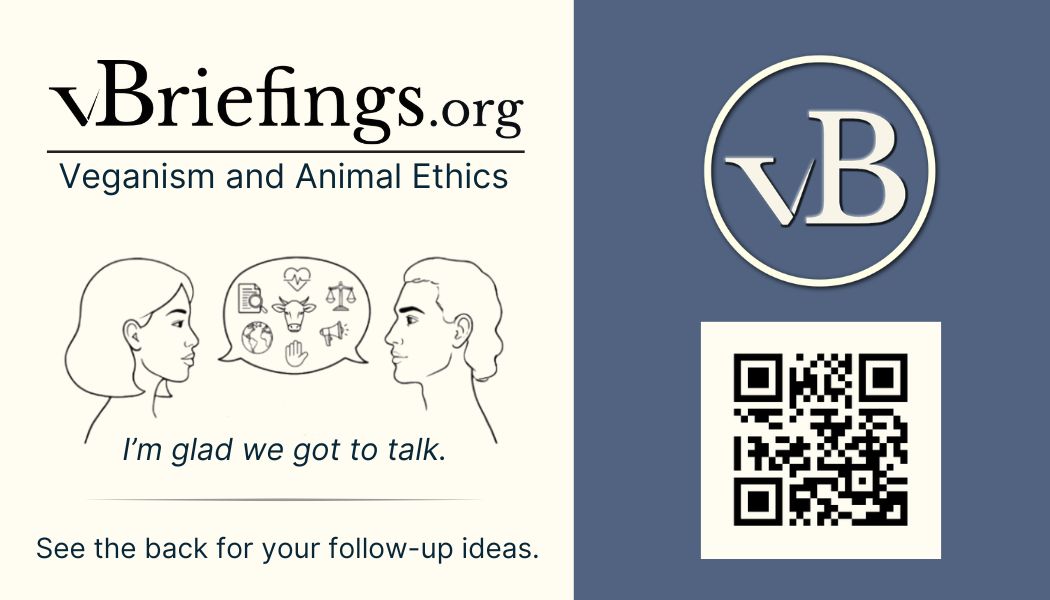
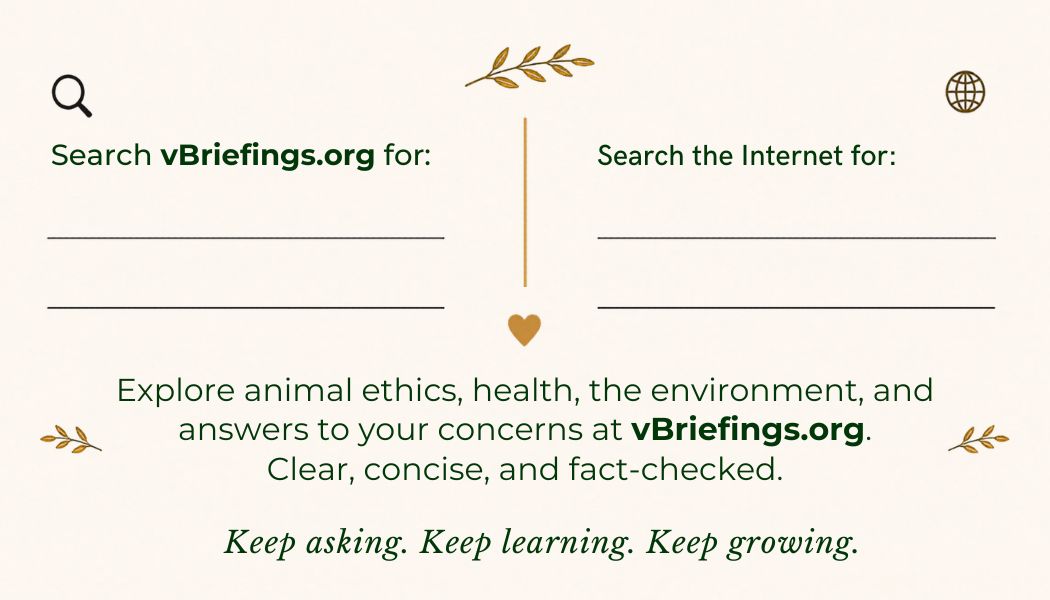
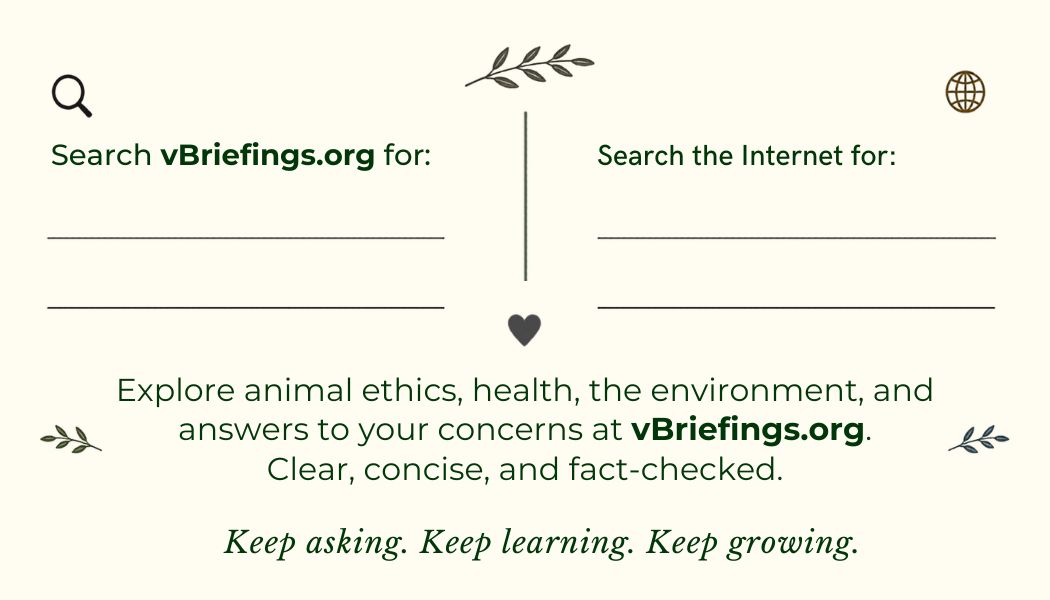
Outreach Cards +
See our briefing “Outreach Cards: Why They Work and How to Get and Use Them” for more information.
Also, we have other advocacy briefings on effective conversations, language, rapport, using the platform, and more.
Outreach cards are not specific to individual briefings, although they can be customized to direct people to a particular briefing. They are included here as a reminder that they are available and can be an effective follow-up tool for outreach.
Two designs are available: unbranded and branded.

Socratic Questions
Socratic-style questions are embedded in the Advocacy Notes below, and shown in italics.
These are open-ended, thought-provoking questions designed to encourage critical thinking, self-reflection, and deeper understanding. They are inspired by the Socratic method, a teaching technique attributed to the ancient Greek philosopher Socrates, who would ask his students probing questions rather than directly providing answers.
The goal is to help people examine their beliefs, clarify their thoughts, uncover assumptions, and explore the evidence and reasoning behind their ideas.
Advocacy Notes
Tips for Advocacy and Outreach
General Tips
A number of objections to veganism based on religion may be difficult to overcome because they stem from deeply held beliefs about the nature of existence and humanity’s place within it.
Regardless of your personal beliefs, it is not productive to challenge the existence of a soul when speaking with those who firmly believe in one. Such beliefs are typically deeply held and unlikely to change.
The most effective approach is to explain why the existence or non-existence of a soul is irrelevant to the topic at hand.
Segue the Conversation Back to Animal Ethics
It’s always good to get back to ethics as soon as possible.
- “If a cow screams in pain while being killed, does it matter whether it has a soul?”
- “If someone was kicking a dog, would you stop them? Or would you say, ‘It’s fine, the dog doesn’t have a soul’?”
- “Even if we accept that animals don’t have souls, does that mean we can mistreat them?”
Why? This forces them to confront the moral inconsistency of their position.
Challenge Their Assumptions on Their Own Terms
If they are religious, challenge their assumption within their own belief system:
- “Actually, some Christian teachings say animals have souls. Pope John Paul II stated that ‘animals possess a soul, and men must love and feel solidarity with our smaller brethren.’”
- “If animals don’t have souls and no chance of an afterlife, wouldn’t that mean we owe them even greater kindness in this life? C.S. Lewis thought so.”
- “Job 12:10 says that in God’s hand ‘is the soul of every living thing.’ So, does that mean animals have souls too?”
Why? This shakes their confidence in their argument without direct confrontation.
Show Them the Existence of a Soul is Irrelevant
“If we discovered tomorrow that humans don’t have souls, would that mean it’s okay to kill us?”
Why? This exposes the moral irrelevance of the soul argument.
Get Them Thinking
If they start getting defensive, don’t push—leave them with a thought-provoking question:
- “I get that you believe animals don’t have souls. But if avoiding their suffering is easy, why not choose kindness?”
- “If it were proven tomorrow that animals have souls, would that change your view on veganism?”
- “If animals don’t have souls and no afterlife, wouldn’t that mean we owe them even greater kindness in this life?”
Why? This keeps them thinking rather than shutting down.
Footnotes
Our sources, with links back to where they are used.
Citations and footnotes are not needed for this briefing.